
This is one of the hardest blogs I’ve ever had to write. Maybe ever. It’s not my usual lighthearted, silly post.
But sometimes staying quiet feels heavier than speaking up. Because silence isn’t neutral. Silence is complicity.
Like many people—including the tens of thousands protesting—I’m beyond disheartened watching the current chaos surrounding Immigration and Customs Enforcement (ICE) and the tone of our national conversation. Something in the air feels… off. Heavier. Meaner.
And I keep thinking about my first-grade teacher, Mrs. McDaniel. This soft-spoken Black woman explained racism in the most delicate of ways. Still to this day, I remember where I sat on the carpet. I remember her clear frames.

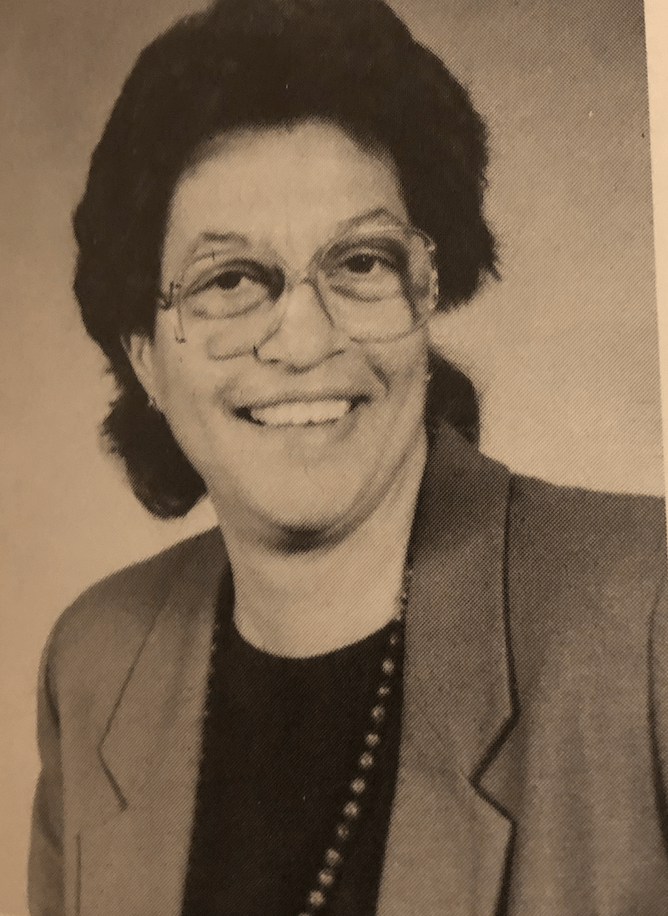
Most of all, I remember what she said. “How would you feel if you were treated differently just because your hair color was red?”
The class was aghast. Words like “unfair” or “wrong” were said among six-year-olds.
She taught us something simple that has stuck with me for decades:
When you see racism, you call it out.
Not later. Not privately. Not when it’s convenient.
Choosing Who We Are
We live in a free country—at least for now. And I don’t say that tongue-in-cheek but with a genuinely uneasy heart.
Freedom means we get to choose our values.
We choose how we treat people.
We choose whether we tear people down or lift them up.
And lately, those choices feel more urgent than ever.
If I get “canceled” for pushing for basic kindness or the bare minimum of respect, so be it. Truly. Because if we ever want anything to change, we have to say something when it’s not okay.
When the Line Gets Crossed
Recently, Donald Trump removed a video from Truth Social that depicted Barack Obama and Michelle Obama as apes. Even Republican Senator Tim Scott called it “the most racist thing I’ve seen out of this White House.”
Let me be clear: this isn’t about party lines for me. It’s about basic human decency. About the kind of country we want to be—and the kind of example we’re setting for our kids.
Because my first-grade self? She would be horrified.
The “Go High” Question
There’s a clip of Stephen Colbert asking Michelle Obama something many of us have felt:
“Do we REALLY have to ‘go high’ when they go low?”
Honestly? I’ve wondered the same thing.
Michelle Obama’s response reminds me while so many of us, including me, look to her in dark times:
“For me, going high is not losing the urgency or the passion or the rage, especially when you are justified in it,” she said. “Going high means finding the purpose in your rage. Rage without reason, without a plan, without direction is just more rage. And we’ve been living in a lot of rage.”
Going high doesn’t mean suppressing the urgency, the passion, or even the justified rage. It means finding purpose in it. Rage without direction just creates more rage.
“If going low worked,” she added, “we’d do it.”
That sentiment lives rent-free in my brain. Because she’s right. Going low might feel good for a few minutes. But it doesn’t fix anything long-term. It just keeps the spiral going.
“I’m trying to push us to think about solutions that will actually unite us and get us focused on the real problem. That’s what I mean when I say ‘go high,’” Obama concluded. “So yes, go high. America, please, go high.”
Why Speaking Up Still Matters
In The Magic Mountain, author Thomas Mann wrote:
“Tolerance becomes a crime when applied to evil.”
That’s the tension so many of us are feeling right now.
Yes—kindness matters.
Yes—grace matters.
Yes—going high matters.
But so does drawing a line.
So does saying: this is not okay.
From My (Still Hopeful) Heart
Look, it’s scary to speak out. I won’t pretend it isn’t. The internet is loud. The backlash is real.
But I keep coming back to Mrs. McDaniel’s advice—the undeniable feeling of injustice and need to speak up. Moreover, what and how we teach our kids. And, the power that certain lessons can stick with us forever.
My first-grade self believed people should be treated fairly. That racism was wrong. That kindness wasn’t optional.
Honestly? I think she was onto something. And I’m not ready to disappoint her now.
 Lauren's Law